
Icarus Watch
A mechanical pilot watch built like the instruments that inspired it.
[preview]
Available Now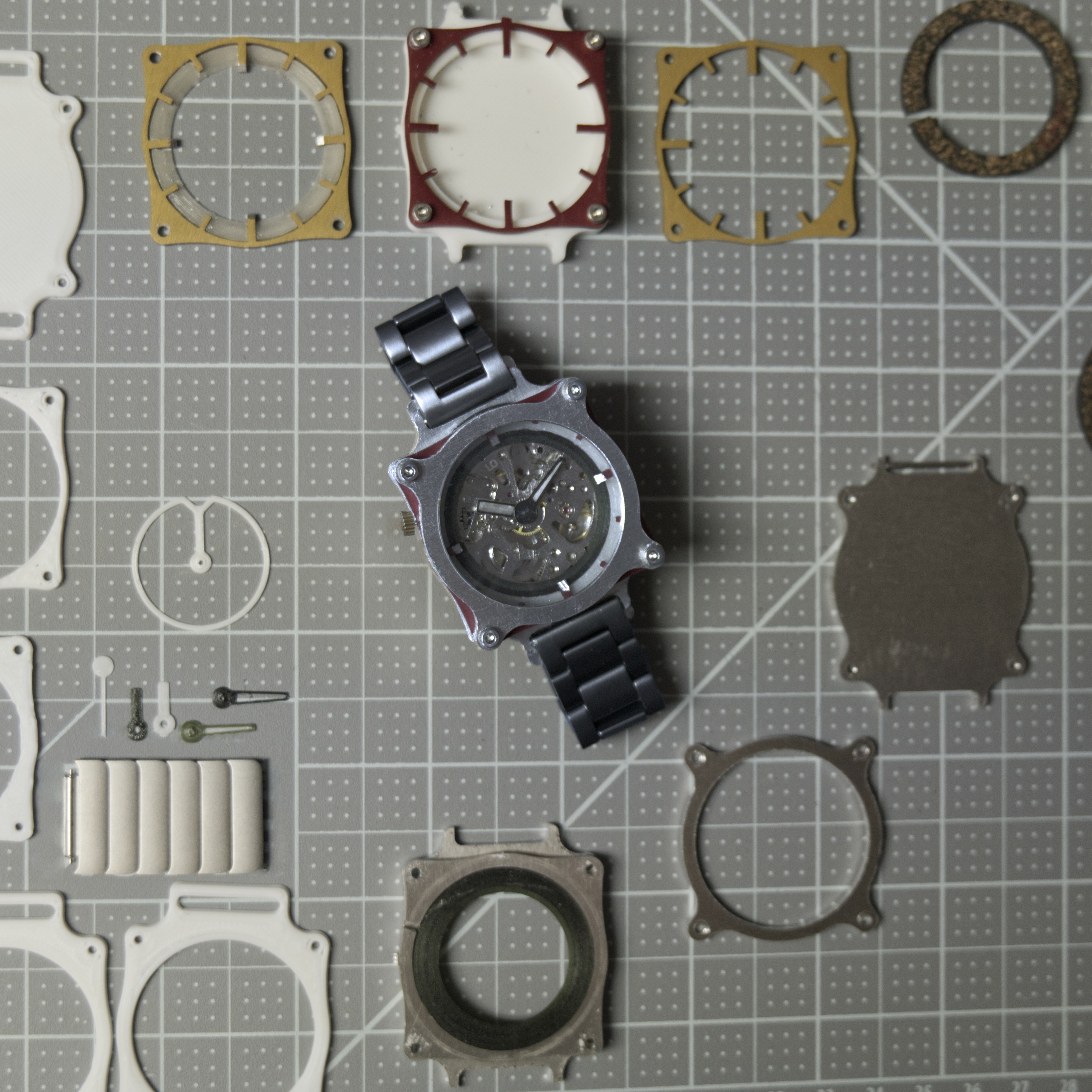
Origin
The Icarus exists because someone said product design requires permission. It doesn’t. It requires material, process, and the willingness to ship. High agency and the ability to JUST DO THINGS.
The comment came from a design studio, the kind of gatekeeping that mistakes credentials for capability. “You are not qualified to make things.” Rather than argue the point, the response was to make a thing. Not only render a concept. Not an interesting post. A physical, mechanical product with real tolerances, real suppliers, and a real price tag. The watch is the rebuttal. Everything after this section is the evidence.
The Problem
Pilot watches have a specific visual identity: large crowns, high-contrast dials, luminous hands, but almost none of them are actually built like the instruments they reference. The cases are conventional: machined steel or titanium monoblock shells with pressed-in movements. The cockpit inspiration is skin-deep.
The Icarus asks a different question: what if the case construction itself came from instrument design? Not the graphics on the dial. The structural logic of the object.
Panel Assembly
Aircraft instrument housings are assembled from discrete components: bezels, backplates, mounting rings, stacked and fastened into a single unit. Each layer is individually manufactured, individually finished, and mechanically joined. The assembly is the architecture.
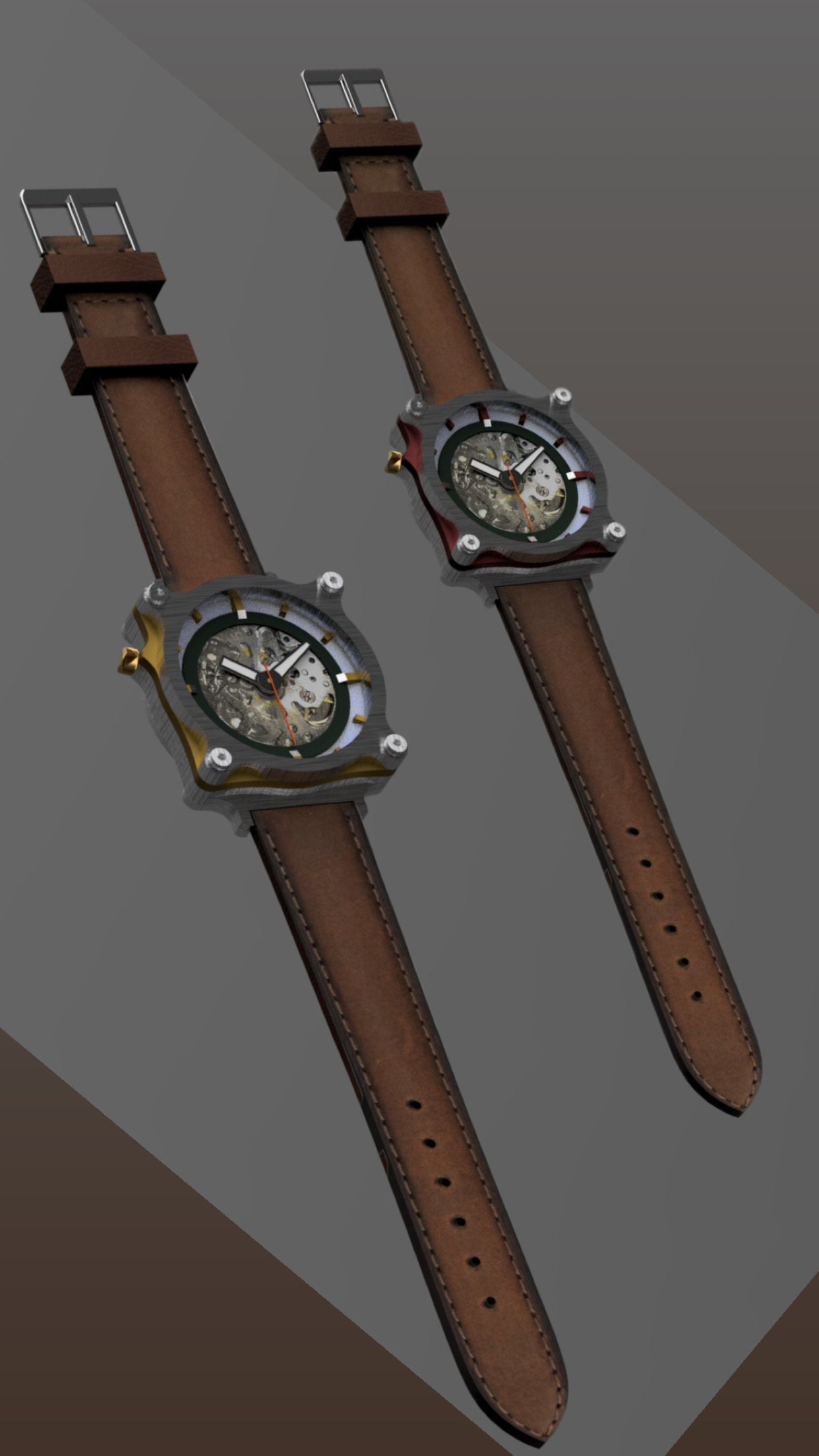
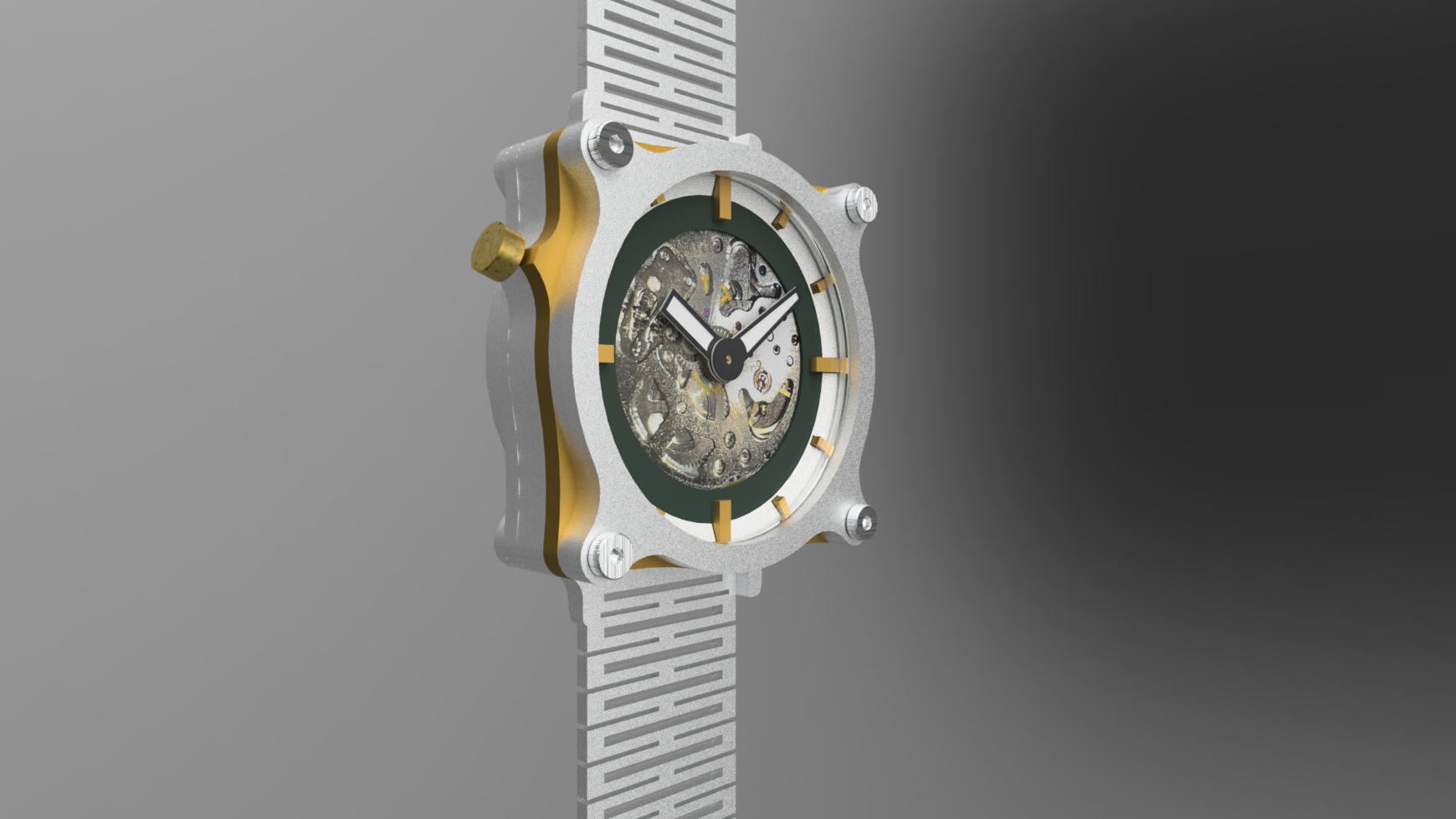
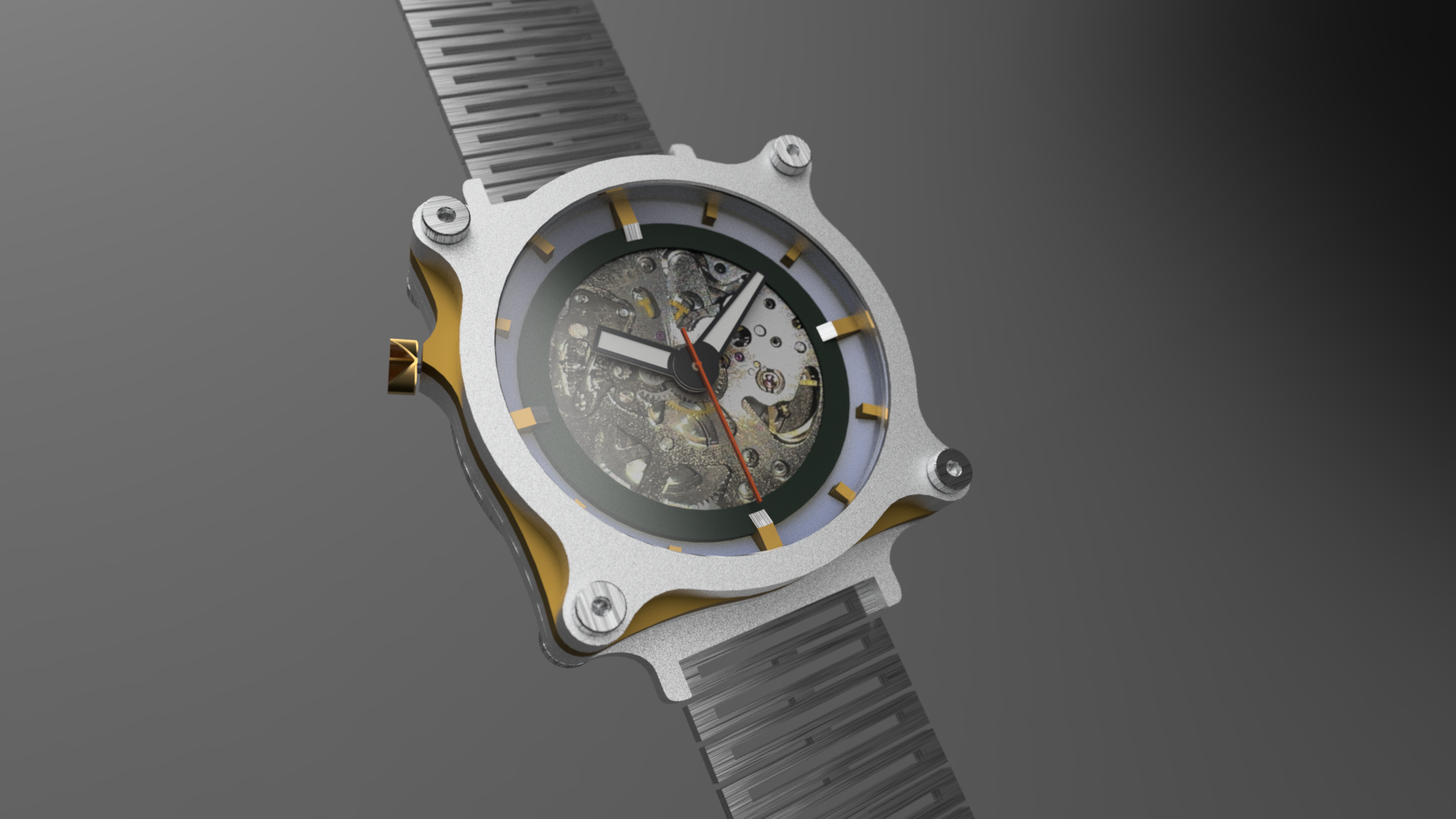
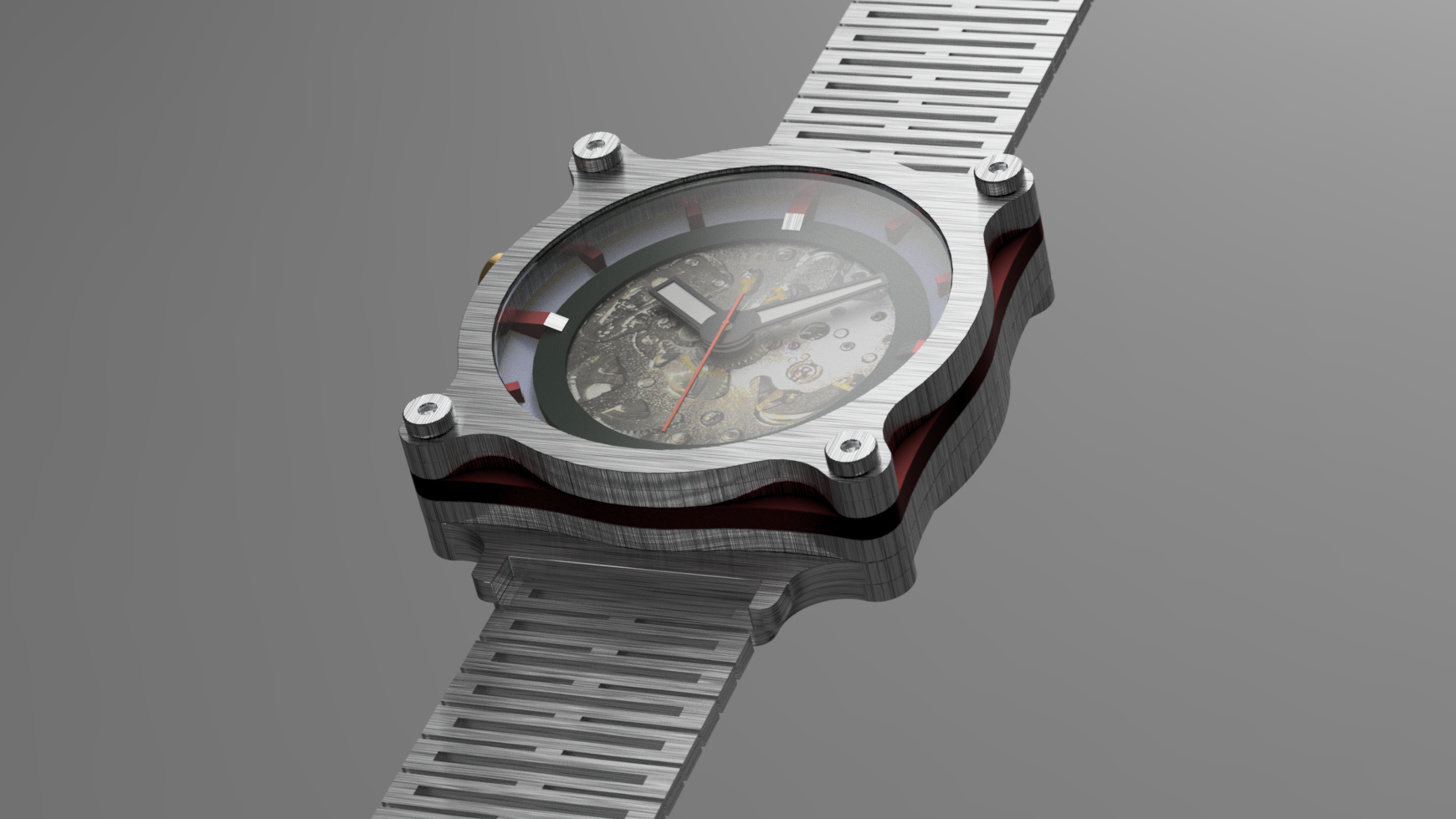
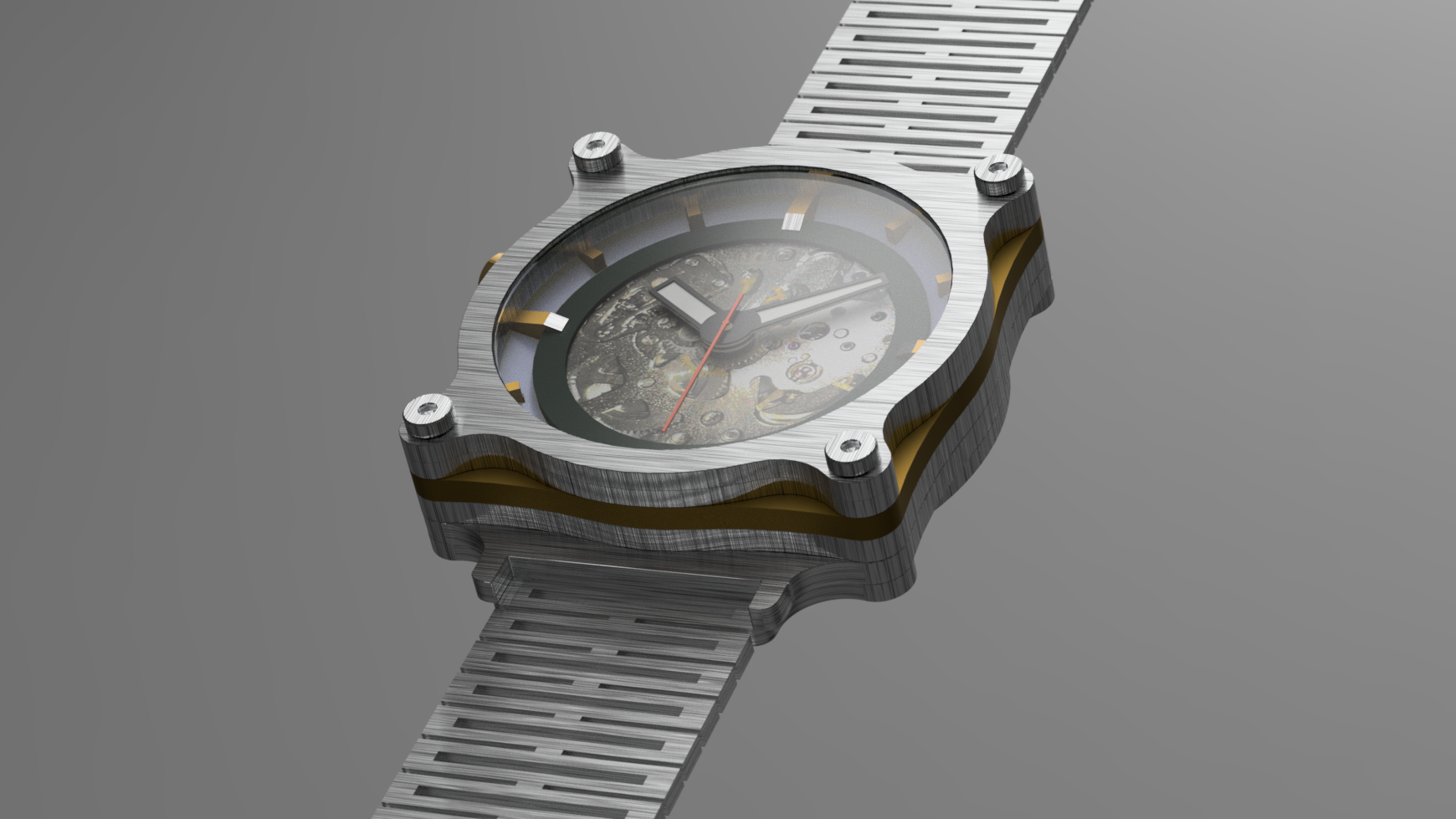
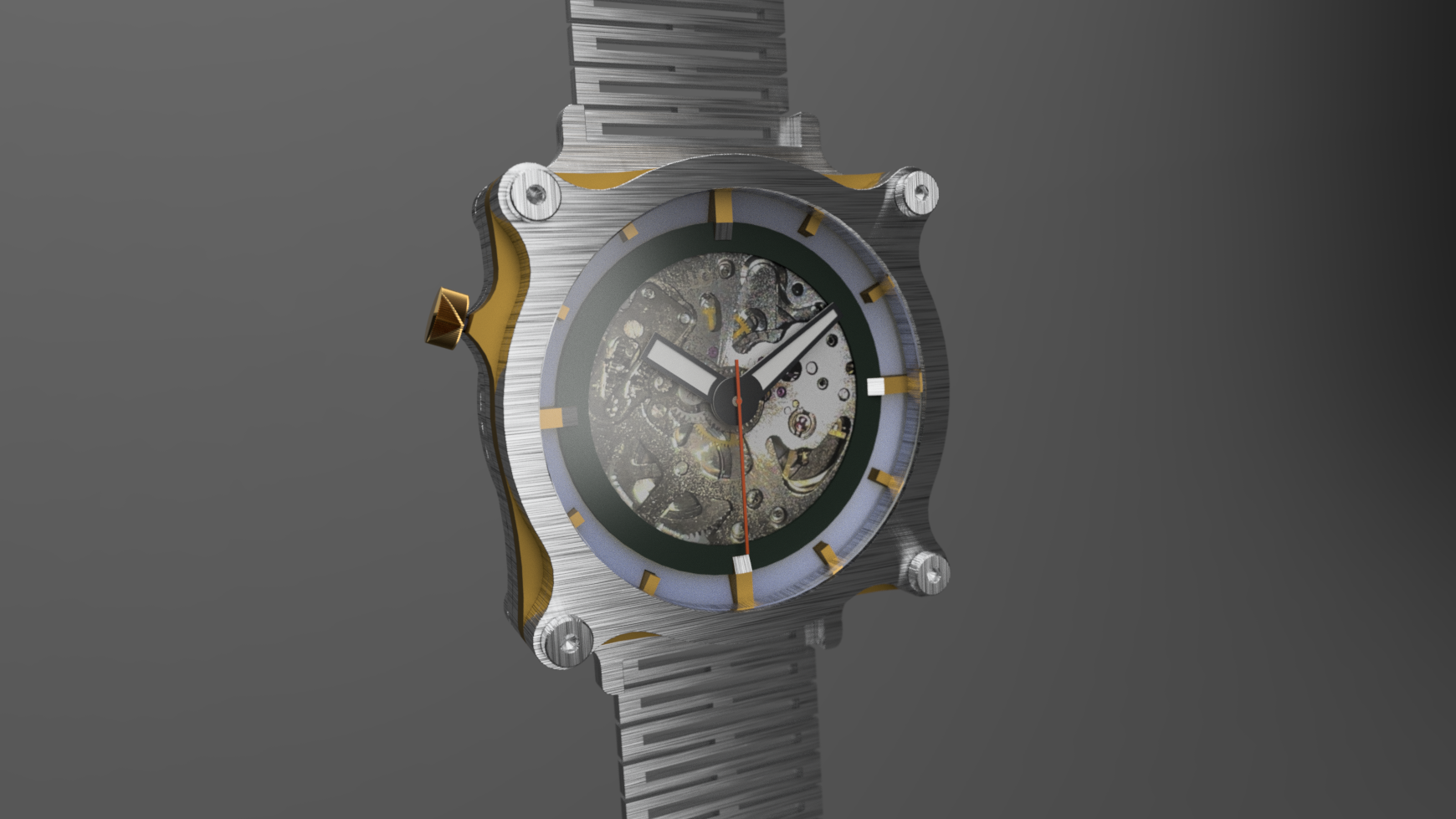
The Icarus case follows the same principle. Flat 6061-T6 aluminum sheets are laser-cut into component layers (bezel ring, mid-case frame, caseback plate), then stacked, aligned, and locked together with exposed corner fasteners. There is no hidden construction. The side profile of the case is an elevation drawing of its own assembly sequence.
This is what “built, not sculpted” means. The geometry is determined by the manufacturing process, not carved away from it. The exposed fasteners are not decorative hardware on a conventional case. There is no imitation or decoration, they are the case.
Material Choice: Aluminum, with Purpose
Most mechanical watches at this price use 316L stainless steel. It is dense, corrosion-resistant, and universally available. The Icarus uses 6061-T6 aluminum, roughly one-third the weight of steel at comparable strength.
The choice is functional. A layered panel-assembly case in steel would be heavy enough to defeat the purpose of its own construction method. Aluminum keeps the assembled stack light on the wrist while allowing hard anodizing for surface durability. The anodized finish adds the finished product contrast that gives the case its instrument-panel character.
Aluminum is also the material of aircraft fuselages, avionics housings, and cockpit bezels. It is not a budget substitution. It is the correct material for what the Icarus is trying to be.
The Movement
The Icarus runs a hand-wound mechanical movement. Manual winding is a deliberate choice: intention over automation, unobstructed visual access to the skeleton, a thinner profile than most automatics, and a daily ritual between your hand and the mainspring. An automatic rotor would add weight, block the dial, and mute that intention.
This movement was chosen because the plate geometry and bridge layout read well through an open dial—visually interesting inside the case, not a movement you have to hide behind a dial.
The case is unlike anything else.
You wind it. It runs. The connection is direct.
Legibility as a Design System
The dial layout borrows its logic from aviation instrumentation: maximum contrast, minimum ambiguity. But a skeleton dial breaks the first rule of instrument design: it introduces visual complexity behind the hands. The Icarus treats that tension as the design problem worth solving.
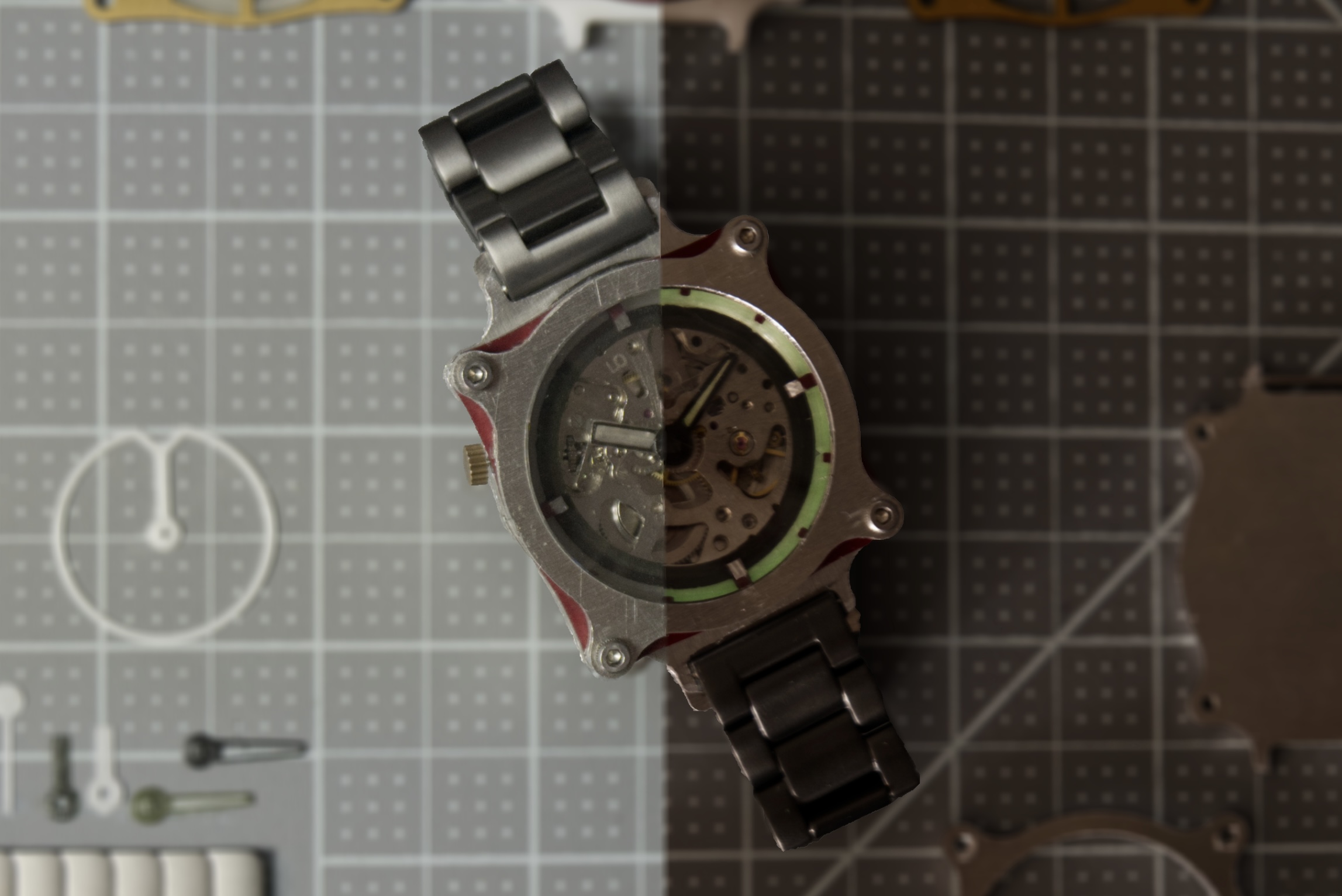
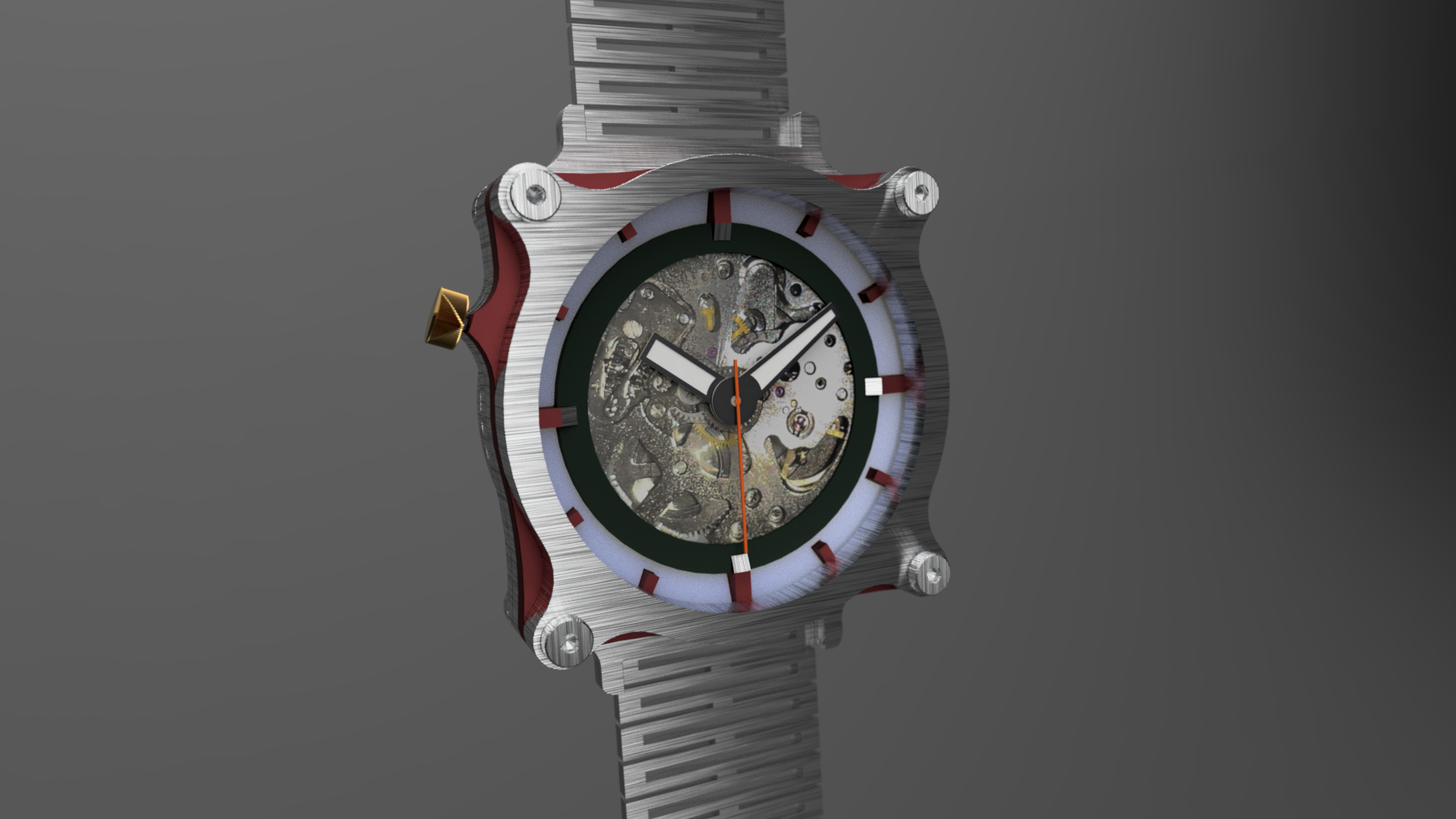
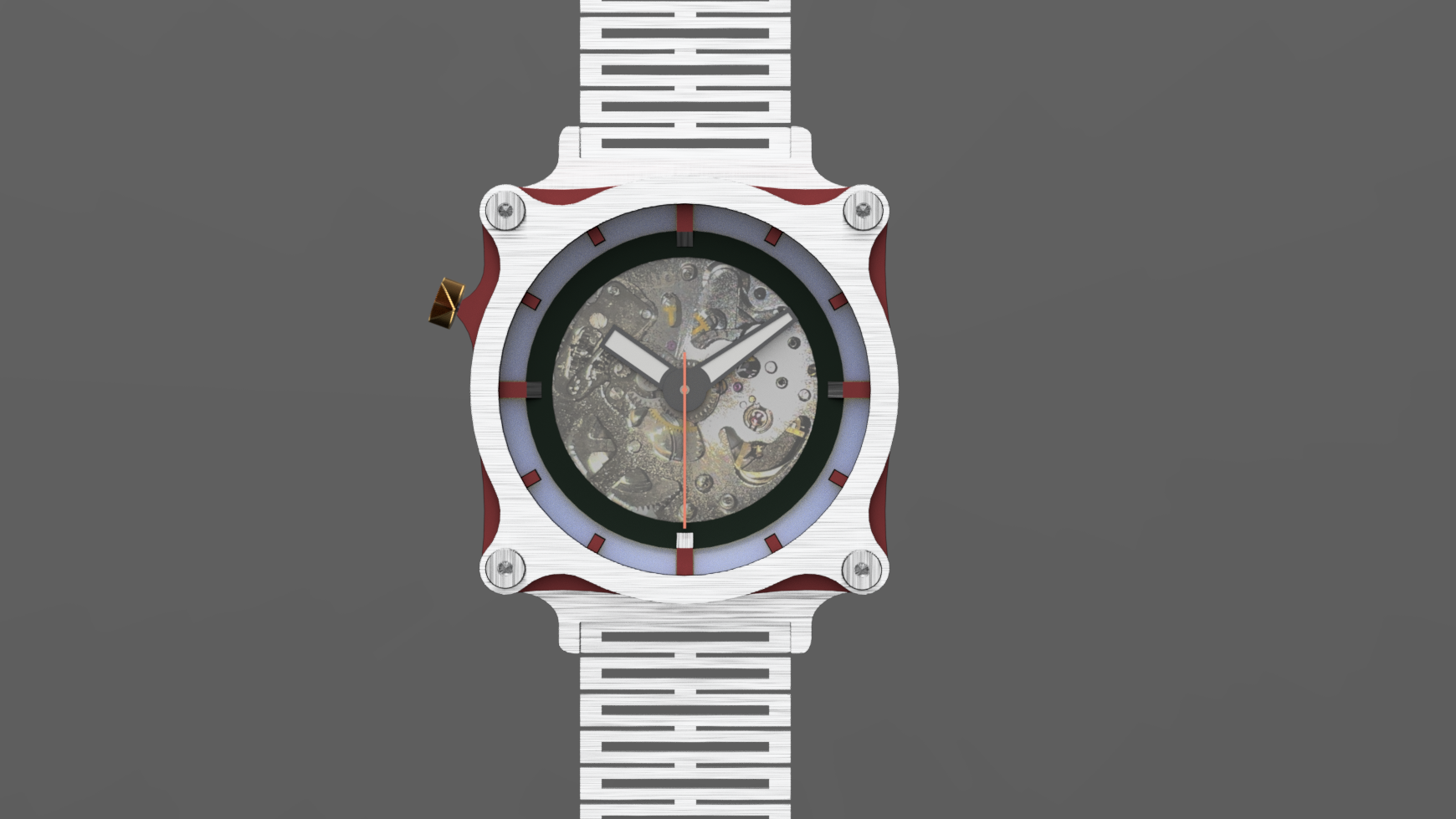
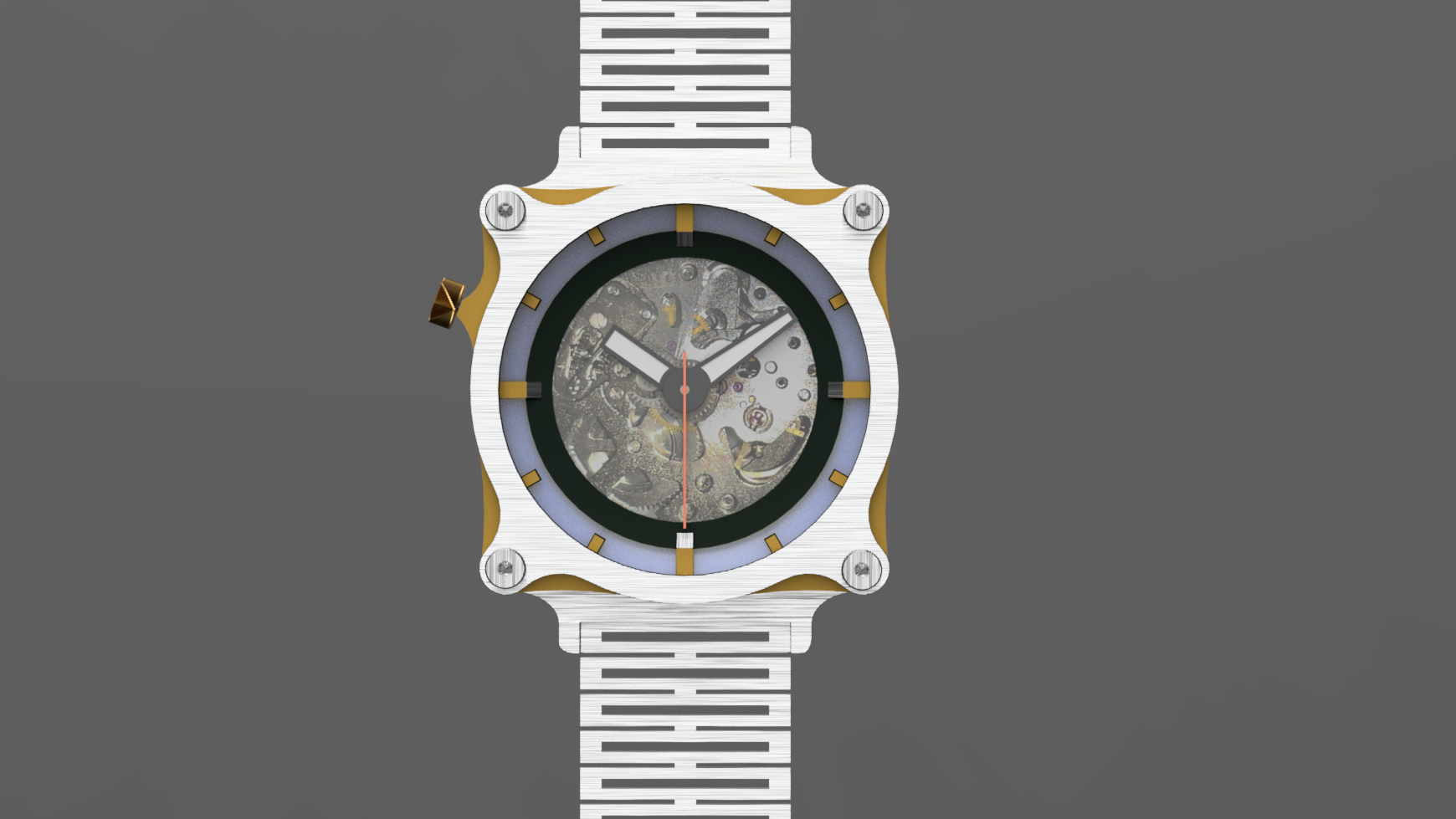
Sharp, instrument-style lance hands, lumed, read clearly against an open skeleton background. A continuous luminosity ring at the chapter ring position, carrying luminous fill that charges in ambient light and reads in total darkness. Index markers sit embedded in that ring. The seconds hand is international orange, a color chosen for visibility against both light and dark backgrounds, standard in aviation warning and caution systems. The hands and luminous layer sit forward of the movement, creating a readable plane over a mechanically interesting one.
This is the Icarus’s answer to the field watch and flieger traditions. Both prioritize legibility through simplicity. The Icarus takes the principle further by earning legibility through layered contrast rather than a clean dial, treating the luminous system as structural rather than supplementary.
Specifications
| Case | 40 mm, layered 6061-T6 aluminum panel assembly. Corner-fastened. Hard anodized, brushed red/gold. |
| Crystal | Domed sapphire front |
| Caseback | Aluminum plate (layered construction) |
| Movement | Hand-wound mechanical, skeleton visible through the dial. |
| Dial | Open-worked skeleton, applied indices, luminosity ring |
| Hands | Instrument-style lance, lumed (hour/minute), international orange seconds |
| Lume | Hand painted ring and hands; indices embedded in luminosity ring |
| Water Resistance | Not waterproof |
| Strap | 20 mm lug width. Ships with calfskin leather band. Brushed aluminum “Living Hinge” custom bracelet available, integrated into the body as a single piece of metal. |
| Weight | ~55 g current prototype (not a guarantee for final shipped product) |
| Production | Small-batch, hand-assembled, individually numbered |
| Price | $499.99 USD |
Everyday Carry
The Icarus is built to wear daily. The sapphire crystal resists scratching in pocket or on wrist. The aluminum case takes knocks without the weight penalty of steel, and the added patina of field use is part of the design intent. The 20 mm lugs swap between the leather band and the aluminum bracelet, or whatever strap you prefer.
At 40 mm with a slim manual-wind profile, it sits in the modern sweet spot for an everyday watch: large enough to read, light enough to forget it is there. Present enough to be a statement watch. The field watch crowd and the EDC community both have a name for this: a tool watch you actually use as a tool.
How It Compares
The Icarus sits in a category that includes mechanical pilot watches, flieger watches, aviation-themed tool watches, and skeleton field watches. Some reference points:
At the high end, brands like Bell & Ross and IWC produce aviation instrument watches at $4,000 to $15,000 with proprietary movements, ceramic or titanium cases, and global distribution. At the microbrand level, makers like Zelos, Laco, DuFrane, and Borealis offer mechanical pilot watches from $350 to $1,900 in conventional steel or titanium cases.
The Icarus occupies a specific gap: a hand-wound skeleton pilot watch under $499.99 with a case construction method that none of the above use. The layered aluminum panel assembly is unique in this segment. If you are looking for an affordable alternative to IWC or Bell & Ross pilot watches, or a microbrand mechanical watch that is structurally distinct from every other round-case flieger, the Icarus is the only option that builds the case like the instruments it draws from.
Design Process
The Icarus started as a question about watch case manufacturing constraints: specifically, whether a case could be fabricated entirely from flat stock using digital cutting and mechanical fastening, with zero machined contours. The answer required multiple prototype iterations, 3D prints, test cuts, and tolerance adjustments in the layer assembly interface.
The result is a watch that can be manufactured without CNC milling, investment casting, or forging, the three processes that define conventional watch case production. Every component is 2D-cut and assembled in 3D. The design is native to laser and waterjet fabrication.
Own the Instrument
The Icarus is available for purchase at $499.99. Built to order with estimated shipping in about one month. Limited production. Hand-assembled. Individually numbered.
Purchase →